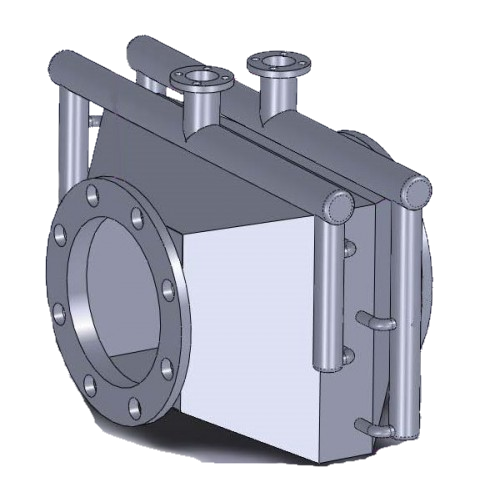
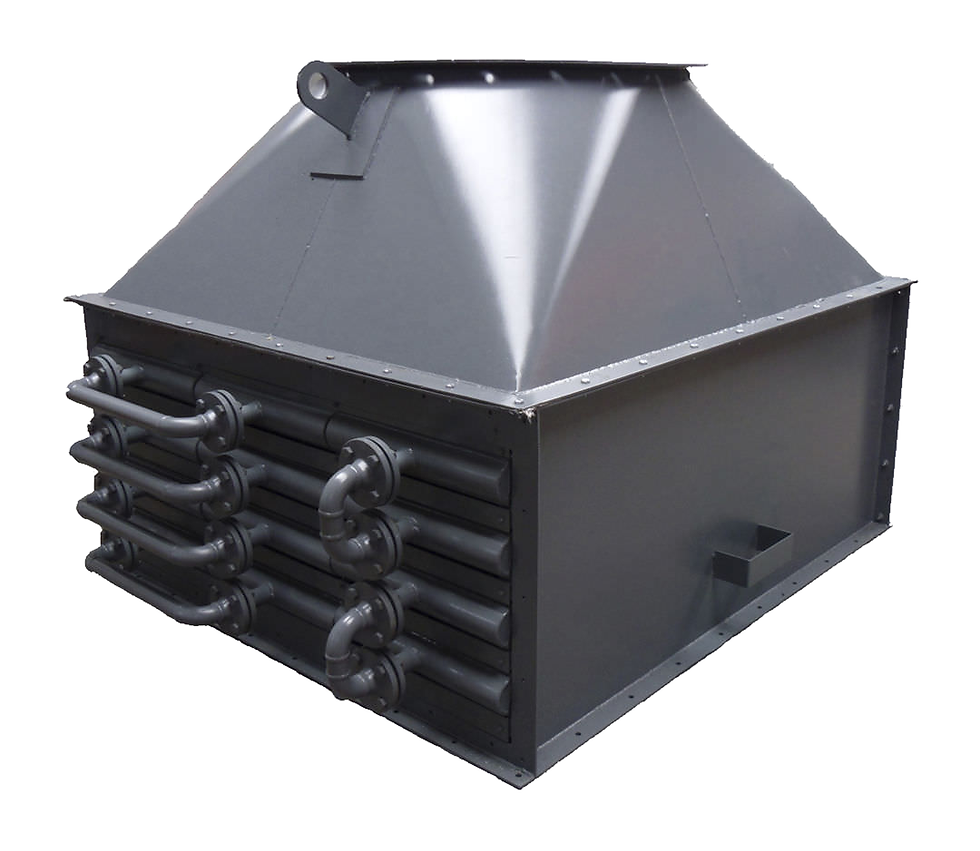
Economizer
MESANN Economizer
In steam boilers, hot oil boilers, glass or similar melting or drying furnaces, and cogeneration plants, heat gases discharged into the flue are recovered by heating boiler feedwater, central heating water, hot domestic water, and process water; or by heating combustion air, ambient air, and process air. It should be noted that every 20°C reduction in the temperature of the hot flue gas discharged into the flue increases the efficiency of the device by 1%.
STRUCTURE OF HEAT RECOVERY DEVICES; They are manufactured in different designs according to the operating conditions and the characteristics of the combustion. Economizers are made of seamless pipe, finned tube, 316L stainless steel pipe; with or without a reservoir, depending on the operating conditions, with or without a reservoir. In coal and fuel oil burning boilers, the water must enter the economizer at a minimum temperature of 70°C. Otherwise, corrosion will occur at the inlet point. The flue gas leaving the economizer should not be less than 180°C for sulfurous coal, 160°C for fuel oil, and 120°C for natural gas in a non-condensing economizer. In gas burning boilers, boiler efficiency can be increased by up to 15.7% by using a condensing economizer. Scotch type at 6 bar operating pressure; The flue gas temperature leaving a natural gas-fired steam boiler is 210°C at full load. The recovery (fuel saving) values obtained at different flue gas temperatures upon exiting the economizer placed behind the boiler are shown. In natural gas-fired boilers, by adding a combustion air heater to the oil boiler, the flue gas temperature can be reduced to 120°C while the combustion air temperature can be increased to 250°C. Boiler efficiency increases by 11.5%.